




 You’re in marketing for one reason: Grow. Grow your company, reputation, customers, impact, profits. Grow yourself. This is a community that will help. It will stretch your mind, connect you to fascinating people, and provide some fun along the way. I am so glad you’re here. -Mark Schaefer

Introduction: In many of my classes and lectures, I pass along advice Dr. Robert Cialdini provided to me when I was working on my Return On Influence
His response was simple, elegant, and so true: “Be more human.”
I think this is profound advice and the more I’m in this business I realize how true it is. I think the most human companies will win.
My friend Dr. Ana Canhoto recently wrote on her blog about research that supports this idea for brands and she was kind enough to allow us to re-print it here. I think you will enjoy this.
Brands need to be human and active
By Dr. Ana Canhoto, {grow} Community member
If you are managing a brand’s social media presence, you probably come across recommendations such as ‘interact regularly with your customers on social media’, or ‘humanise your brand’.
But does it work?
According to a series of studies, conducted by Simon Hudson, Li Huang, Martin S. Roth and Thomas J. Madden, with social media users in France, the UK, and the USA, it does. As detailed in their paper in the International Journal of Research in Marketing, social media interactions are positively related with consumer-brand relationship quality, under two conditions.
The first condition linking social media activity with brand relationship quality is brand anthropomorphism. Brand anthropomorphism occurs when we attribute human characteristics such as feelings and soul, or even human shape, movement and voice, to brands. In this study, brands that were perceived as human scored better on brand relationship quality than the others.
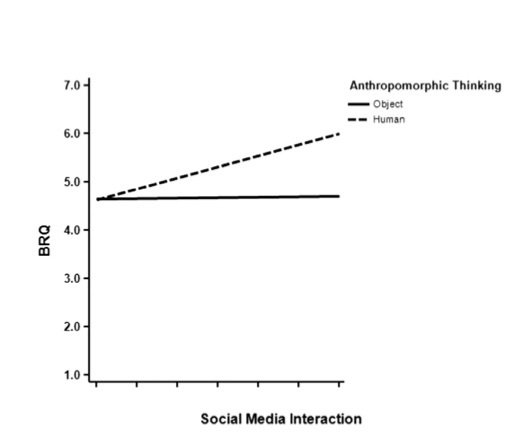
Companies can foster brand anthropomorphism by using human-like physical and personality features, much like M&M Chocolates do with their mascots.

Another way is to show the human side of the brand. Companies can use personal names or initials on social media postings. They can show behind the scenes images and they can connect company and personal milestones. For instance, when the organisation Stemettes celebrated its third anniversary, it posted pictures of staff when they were three years old.

The second condition linking social media activity with brand relationship quality is frequency of interaction. In this study, higher levels of social media presence were associated with higher levels of brand relationship quality.
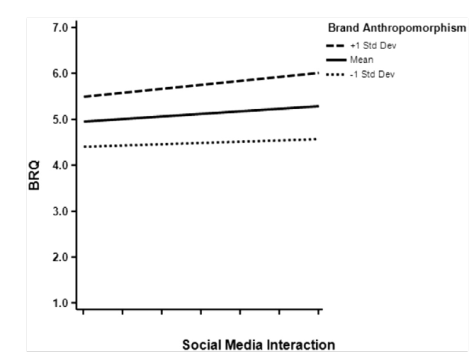
The authors posted that high levels of social media activity increased brand familiarity and knowledge, which also decreased uncertainty. The authors also said that this effect was particularly significant in situations where customers wanted to minimise risk – for instance, for cultures high in uncertainty avoidance, meaning, such cultures that tend to resist change, make detailed plans and, generally, seek a lot of information before adopting an innovation.
For example, in the study described in this blog post, the effect of level of interaction was higher in France than in the other countries studied (i.e., US and UK). France is also a country which scores high in Hofstede’s uncertainty avoidance index (namely, 86; the score for US is 46, and the score for UK is 35). So, the authors suggest that frequency of posting could create a sense of familiarity and reduce anxiety, which is particularly important for cultures that are risk averse.
In summary, frequency of posting on social media is important not only in terms of getting your content seen, but also in terms of creating trust in the brand. However, brand managers should focus on anthropomorphizing the brand before rushing into high levels of social media activity.
In your opinion, which brands do ‘the human side’ really well?
 Dr. Ana Canhoto is Senior Lecturer in Marketing, and leads the masters programmes in Marketing at Oxford Brookes University in the UK. She teaches Marketing Research and Customer Relationship Management. Ana’s research focuses on customer profiling and customer management.
Illustration courtesy Flickr CC and Iqbel Osman