

 You’re in marketing for one reason: Grow. Grow your company, reputation, customers, impact, profits. Grow yourself. This is a community that will help. It will stretch your mind, connect you to fascinating people, and provide some fun along the way. I am so glad you’re here. -Mark Schaefer
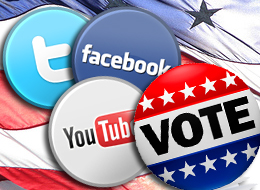 I’m a student of history … probably half the books I read are biographies or something to do with a past era. So today I’d like you to oblige me while I connect the dots between the social media revolution and what appears to be increasing political paralysis in the U.S., India, Greece, and other nations.
My impression is that political leaders of past decades were no less competitive, egotistical, or power-hungry than the politicians of today. They were probably less demographically-diverse, less educated, and less in tune with constituents because of the lag time in communications before the Internet.
It’s hard to compare apples to apples, but for the sake of argument, let’s assume that there has indeed been a shift, and politicians today are less able to find compromise that helps keep a country moving in the right direction. How might we explain the change?
Could there be a paralyzing effect of social media?
Last year I had a fascinating discussion with a bright young man who devised a way to compare the political sentiment on the social web in Iceland with the public positions taken by his country’s politicians. He could then match the data to see which politicians had positions that most closely compared to the sentiment of the nation.
Once the politicians found out about this, they started stopping by his office frequently to compare scores … and change positions if necessary. Today of course, this is possible to do on a minute-by-minute basis.
There is a certain beauty in this. Politicians in a democracy are supposed to be representing the will of the people. Isn’t this real-time feedback exactly what they need?
But I wonder about the possible advantage in a political process 50 years ago when politicians had to use their best judgment instead of real-time “polling” to make a decision. I can imagine leaders in the 1950s locking themselves behind a door and pounding out a compromise without the shifting sands of social media sentiment to contend with.
Wouldn’t it be easier to keep their focus on an issue instead of jockeying for position on Twitter every day?
Wouldn’t it be easier to take an unpopular position (like cutting entitlement programs to balance a budget) if you only had to deal with the outfall every four years instead of every day?
So I could see both sides of this argument, but the one thing we do know is that the social web is not going to go away.
What do you think? In the long-term, will the constant “polling” of social media sentiment analysis contribute to debilitating political paralysis or more enlightened political accountability?